Fengyan Terraces
Overview
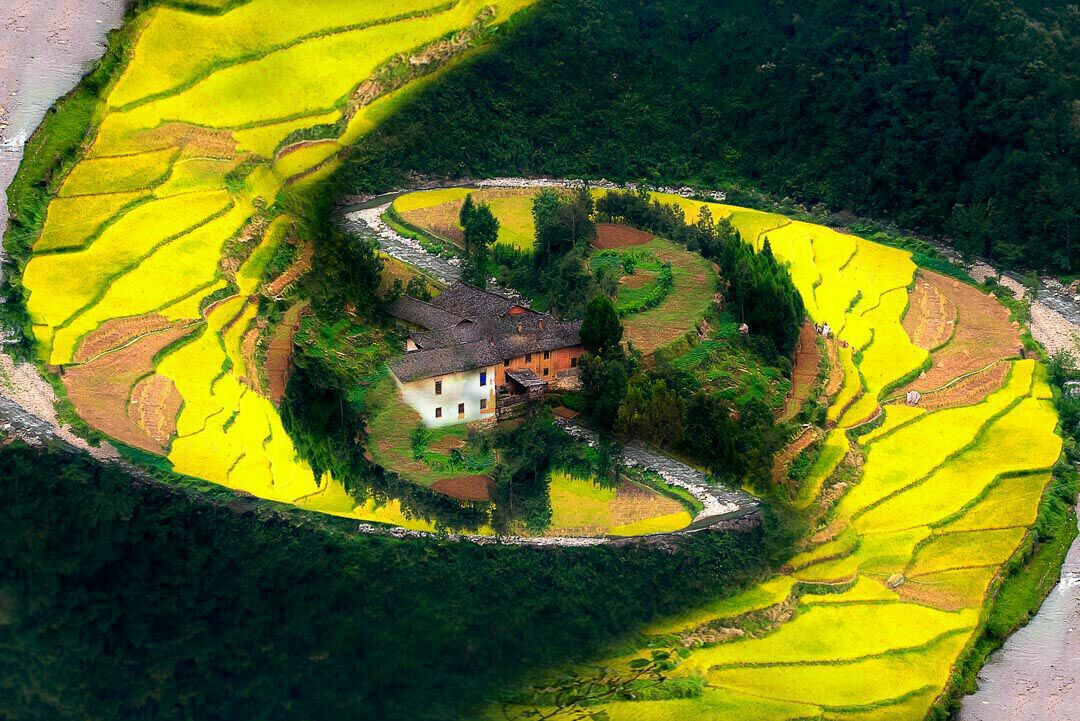
The Fengyan Terraces, located in Hanyin County, Northwest China's Shaanxi Province, are an extensive and historic terraced landscape, recognized for its cultural and ecological significance. Believed to date back over 250 years, these terraces are regarded as the largest and most complete example of Qing Dynasty terracing in the Qinba mountainous region. This expansive area covers approximately 800 hectares and represents a significant achievement in ancient agricultural engineering. The terraces are divided into three distinct sections: Fengjiang, Donghe, and Yanping, and are scattered across the Qinglin and Tapa mountains. Their historical importance and well-preserved state led to their designation as a protected national heritage site in 2019.
The terraces have been transformed into an "eco-museum" by the Shaanxi Provincial Cultural Heritage Administration, presenting a unique outdoor exhibition that highlights the historical agricultural practices and the natural beauty of the region. The eco-museum concept integrates the terraces as "exhibits," complemented by the surrounding landscape, which serves as the "exhibition hall." This innovative approach aims not only to preserve the terraces and their associated cultural elements but also to promote local economic development by attracting tourism and enhancing cultural appreciation.
Key Features
The Fengyan Terraces are notable for their expansive coverage and historical significance. Comprising three main parts – Fengjiang, Donghe, and Yanping – these terraces stretch over 8 square kilometers, providing a clear view of the agricultural practices of the Qing Dynasty. The terraces are meticulously arranged, reflecting the ingenuity and resilience of ancient farming communities who adapted to the challenging mountainous terrain.
In addition to the terraced fields, the site boasts a variety of ancient architectural and cultural elements. Over ten clusters of ancient residential buildings, alongside temples, canals, and mountain fortresses, enrich the historical narrative of the region. These features showcase the integration of agricultural, residential, and spiritual life in the area, highlighting the comprehensive cultural landscape that developed over centuries.
The irrigation systems, integral to the functionality of the terraces, have also garnered international recognition. Recently, the Fengyan terraced field system was added to the World Heritage Irrigation Structures (WHIS) list, further emphasizing its significance in the history of agricultural engineering. This recognition underscores the terraces' importance not only within China but also on a global scale, as they exemplify significant advancements in ancient irrigation technology.
Attractions
Visitors to the Fengyan Terraces can explore a variety of attractions that blend natural beauty with cultural heritage. The terraced fields themselves are a stunning visual spectacle, particularly during planting and harvest seasons, when the fields display lush greenery or golden hues. The backdrop of the Qinglin and Tapa mountains adds to the scenic charm, making the area a popular destination for nature enthusiasts and photographers.
The ancient buildings and temples scattered throughout the terraces offer a glimpse into the architectural styles of past dynasties and the spiritual life of the local communities. These structures provide cultural context and historical depth, inviting visitors to imagine life in the region during the Qing Dynasty.
In addition to the historical and scenic attractions, the eco-museum initiative offers educational opportunities for visitors to learn about traditional farming techniques, irrigation methods, and the ecological significance of terracing. Guided tours and informational displays help visitors appreciate the ingenuity and sustainable practices of ancient Chinese agriculture.
Cultural Significance
The Fengyan Terraces hold profound cultural significance, representing the intersection of agricultural innovation, ecological adaptation, and community life. Built by the Wu family, who immigrated from Changsha during the Qing Dynasty, the terraces are a testament to the perseverance and resourcefulness of settlers who transformed the mountainous landscape into fertile farmland. This historical narrative highlights the broader story of migration and settlement patterns in ancient China.
As a protected national heritage site, the Fengyan Terraces serve as a living museum, preserving the traditional lifestyle and cultural practices of local communities. The integration of cultural elements such as temples and residential buildings reflects the harmonious relationship between humans and nature, which is a central theme in Chinese cultural philosophy.
The national and international recognition of the Fengyan Terraces underscores their importance as a cultural landmark. By safeguarding these terraces and promoting their historical and ecological value, efforts are being made to ensure that future generations can learn from and appreciate this unique cultural heritage. The terraces not only contribute to the local identity and economy but also enhance the cultural richness and diversity of Shaanxi Province and China as a whole.
Photo Gallery(4 pictures)CategoriesCultural HeritageTagCultural LandscapeTangible Cultural HeritageRural TourismCatalogue1. Overview2. Key Features3. Attractions4. Cultural Significance-
- []








